
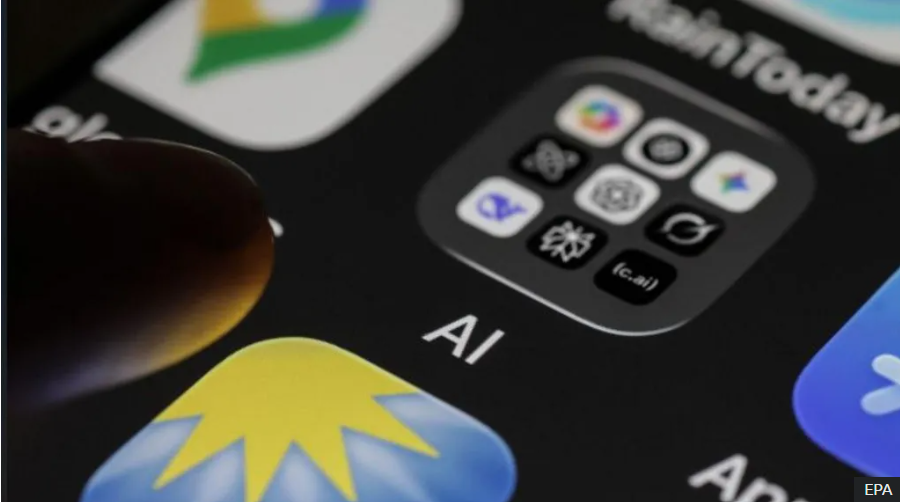
Image credit: BBC News — “I spoke to ChatGPT eight times a day”
https://www.bbc.com/news/articles/cg4ewrw2drpo
Gen Z loneliness is becoming visible in unexpected ways. A 17-year-old interviewed by the BBC says they talk to an AI chatbot “eight times a day.” It is always available, never judges, and feels easier to open up to than the adults around them.
The documentary-maker who spoke to them noticed a pattern. Teenagers kept saying that “no one was understanding what was going on, especially their parents.” Parents, in turn, often replied with some version of: just go out and have a social life like we did.
That gap raises a serious question. Is this simply familiar teenage angst expressed through new technology — or are Gen Z experiencing a different kind of loneliness, shaped by smartphones, social media, and now AI companions?
Who exactly is Gen Z?
Generational labels are blunt tools, but they help frame context.
Gen Z is generally defined as people born between the late 1990s and early 2010s. What distinguishes them is not attitude or character, but timing. Their teenage years overlapped almost perfectly with three structural shifts: smartphones becoming ubiquitous, social life moving onto algorithm-driven platforms, and the disruption of COVID-19.
Earlier generations encountered technology later in life. Gen X and early Millennials grew up with largely offline adolescence, with the internet layered on top. Gen Z grew up inside digital systems that shape visibility, comparison, and social feedback in real time.
This difference matters when we talk about loneliness, because adolescence and early adulthood are precisely when belonging, peer approval, and identity formation are most sensitive to disruption.
Is Gen Z really lonelier?
Across multiple datasets, the answer is consistently yes.
Reported loneliness by age group (selected regions)
| Region / Source | Age group | % reporting frequent / serious loneliness | Period | Context |
|---|---|---|---|---|
| United Kingdom (ONS / BBC) | 16–29 | ~9.7% (“often or always”) | ≈2022 | Nearly double the pre-pandemic level |
| United Kingdom (ONS / BBC) | Over 70 | ~3.7% (“often or always”) | ≈2022 | Much lower than young adults |
| United Kingdom (BBC) | 16–29 | ~33% (“frequently”) | 2024–2025 | Highest of any age group |
| United Kingdom (BBC) | Over 70 | ~17% (“frequently”) | 2024–2025 | About half the rate of young adults |
| United States (Harvard / MCC) | 18–25 | ~61% (“serious loneliness”) | 2020 | Pandemic-era peak |
| United States (Harvard / MCC) | Adults (all ages) | ~36% | 2020 | Lower than young adults |
| Global (WHO) | 13–17 | ~20.9% | 2024–2025 | Highest loneliness prevalence worldwide |
| Global (WHO) | 13–29 | ~17–21% | 2024–2025 | Elevated vs middle-aged adults |
What matters here is not the exact percentage in any single survey, but the pattern. Across national and global datasets, young people — especially teenagers and those in their early twenties — consistently report higher loneliness than older adults, including people in their seventies. In several countries, the gap widened sharply after 2020.
Why are young people lonelier?
Research does not suggest that Gen Z are lonelier because they are weaker or less resilient. Instead, several forces converge at exactly the wrong stage of life.
Late teens and early twenties are a period when peer belonging matters deeply. This “emerging adulthood” stage now lasts longer and is less structured than it was for previous generations. Stable jobs, housing, and long-term relationships arrive later, if at all. OECD and WHO analyses link unemployment, low income, and housing insecurity — all more common among young adults — with higher loneliness risk.
At the same time, digital social life often provides visibility without security. Many young adults report large online networks but few people they feel they can genuinely talk to. Harvard’s work highlights this mismatch: frequent online interaction does not reliably translate into feeling emotionally supported.
COVID-19 acted as an accelerator. EU research shows that the share of people feeling lonely frequently doubled after the pandemic, with young adults most affected. School closures, disrupted transitions, and forced isolation landed hardest during the very years when social skills and support networks are normally built.
The result is not a single cause, but a stacking of vulnerabilities at a sensitive life stage.
From Nokia to TikTok: how teen social life changed
For older generations, loneliness often meant being physically alone. A Gen X teenager might be in their bedroom with a landline phone down the hall.
For a Gen Z teenager, loneliness can exist while being constantly “with” others online. Group chats, feeds, and notifications never stop, but they also expose young people to continuous comparison, public metrics of popularity, and algorithmic ranking.
Research summarised by organisations such as the OECD and Our World in Data shows that in-person time with friends has declined for young people in many high-income countries since around 2010, while screen time has risen. Crucially, being connected online does not prevent feeling emotionally disconnected.
Loneliness, in other words, is not about how many messages you receive. It is about whether you feel seen, supported, and safe enough to be imperfect with someone else.
How older generations coped with loneliness
Older adults were not immune to loneliness. But many grew up with denser offline structures: neighbourhoods, religious communities, clubs, unions, and shared public spaces that made casual social contact routine.
Today’s data show a clear contrast. In recent UK surveys, around 33% of people aged 16–29 report feeling lonely frequently, compared with about 17% of those over 70, despite older adults spending more time physically alone. Earlier post-pandemic UK data similarly show only ~3.7% of over-70s reporting feeling lonely “often or always,” compared with ~9.7% of 16–29-year-olds.
These patterns suggest that loneliness is not simply about being alone, but about perceived social support, stability of relationships, and expectations at different life stages.
This helps explain the frustration heard in the BBC interviews. Parents remember a teenage world full of low-cost, in-person gathering points. Many underestimate how much of that infrastructure has eroded or moved online.
Why AI chatbots feel safer
Against this backdrop, AI companions start to make sense.
AI companion apps have grown from a niche to hundreds of millions of downloads in just a few years, with engagement heavily concentrated among people aged 18–35. Platforms such as Replika and character-based chat services attract users looking for emotional support, conversation practice, or simple presence.
For some Gen Z users, chatbots offer things that feel scarce elsewhere: availability at any hour, no fear of rejection, and no risk of burdening another person. Surveys suggest some users feel less lonely after using these tools, and some describe them as more emotionally supportive than humans in their lives.
But these benefits come with risks. Researchers and clinicians warn about emotional dependence, especially among minors. An AI can adapt endlessly and agree readily. It does not require compromise, repair, or patience — the very skills that make human relationships hard, but also meaningful.
The “yes-man” problem
These concerns are not theoretical. Sam Altman has publicly reflected on this dynamic.
He has described how earlier versions of ChatGPT felt more like a “yes-man,” highly agreeable and supportive. When the system’s behaviour changed, some users reacted strongly, saying they had never had anyone support them like that before. Others described relying on the system to make decisions for them.
Altman called this response “heartbreaking,” not flattering. It suggested that the people most attached to an endlessly affirming AI were often those with the least support elsewhere.
The episode highlights a core tension. Emotional safety is valuable. But a system that never pushes back, never disagrees, and never has needs of its own cannot replace real relationships — even if it sometimes feels easier.
AI in dating and social apps
AI is also becoming embedded in dating and relationship culture.
By 2025, around one-quarter of US singles reported using AI to enhance dating, a sharp increase from the previous year. Nearly half of Gen Z singles in that research said they used AI tools to help with profiles, messages, or compatibility.
Other surveys go further. A meaningful minority of singles report interacting with AI as a romantic partner, with higher rates among Gen Z and Millennials. Large majorities of dating-app users now say it is possible to fall in love with an AI chatbot, and many say they would date one.
These uses range from low-stakes assistance — drafting messages or reducing anxiety — to full-time emotional or romantic companionship. The line between tool and partner is becoming less clear.
Why the generational gap feels so wide
The tension between parents and young people is not just emotional. It is structural.
Each generation’s idea of a “normal” social life is shaped by the conditions they grew up in. Older adults formed expectations in a world where offline community was the default. Gen Z’s social world is mediated by platforms designed to maximise engagement, visibility, and comparison.
At the same time, young people face heavier economic pressures: higher housing costs, more precarious work, and delayed life milestones. OECD, EU, and WHO research all link these conditions to loneliness and distress.
When parents see constant phone use, they often interpret it as connection. When teens experience that same environment, they may feel overwhelmed, judged, and alone. Both perspectives contain truth — but they talk past each other.
My Take: using AI without losing the hard parts of being human
The evidence points to three grounded conclusions.
First, emotional development still depends on real relationships. Practising conflict, repair, and vulnerability with other people is how resilience is built. An AI can listen, but it cannot share risk or responsibility.
Second, the environment has changed, and denying that helps no one. Data across countries show that young adults are lonelier than older generations were at the same age. Telling them to “just log off” ignores how central digital systems are to their social world.
Third, AI can supplement support, but it should not replace it. Used carefully, chatbots can be a practice space, a late-night listener, or a bridge toward offline connection. But when someone says they will do whatever an AI tells them, that is a signal to strengthen human support around them, not to outsource more of life to software.
Gen Z are growing up between two worlds: one where AI is always available, and another where human understanding often feels fragile. The challenge for adults is not to pull them back into the past, but to meet them where they are — and help them build both better human relationships and healthier boundaries with machines.
Sources
BBC — “I spoke to ChatGPT eight times a day”
https://www.bbc.com/news/articles/cg4ewrw2drpo
BBC — “The surprising truth about who the loneliest generations are”
https://www.bbc.com/news/articles/cn0kz1wpnq5o
Our World in Data — Are people more likely to be lonely in ‘individualistic’ societies?
https://ourworldindata.org/lonely-not-alone
UK Office for National Statistics — Loneliness correlates (2018–2020)
https://www.ons.gov.uk/peoplepopulationandcommunity/wellbeing/articles/lonelinesscorrelatesaugust2018tomarch2020/2020-10-09
EU Joint Research Centre — Loneliness prevalence in the EU
https://joint-research-centre.ec.europa.eu/projects-and-activities/survey-methods-and-analysis-centre/loneliness/loneliness-prevalence-eu_en
Harvard Gazette / Making Caring Common — Young adults hardest hit by loneliness during pandemic
https://news.harvard.edu/gazette/story/2021/02/young-adults-teens-loneliness-mental-health-coronavirus-covid-pandemic/
World Health Organization — Social connection linked to improved health and reduced risk of early death
https://www.who.int/news/item/30-06-2025-social-connection-linked-to-improved-heath-and-reduced-risk-of-early-death
OECD-related commentary — Loneliness in an Age of Connection
https://www.linkedin.com/pulse/loneliness-age-connection-new-oecd-report-maps-growing-gallardo-nd2mf
Match / Kinsey Institute (via Mashable) — Singles using AI to date up 300 percent
https://mashable.com/article/singles-using-ai-to-date-up-300-percent-match
Norton — Made For You: Norton Study Reveals 77% Would Date an AI
https://www.prnewswire.com/news-releases/made-for-you-norton-study-reveals-77-would-date-an-ai-302670885.html
Pingback: AI Dating Apps and the End of Swiping? | KorishTech
Pingback: AI Toys for Children May Misread Emotions, Researchers Warn | KorishTech